Anna Líndal
February 11, 2022

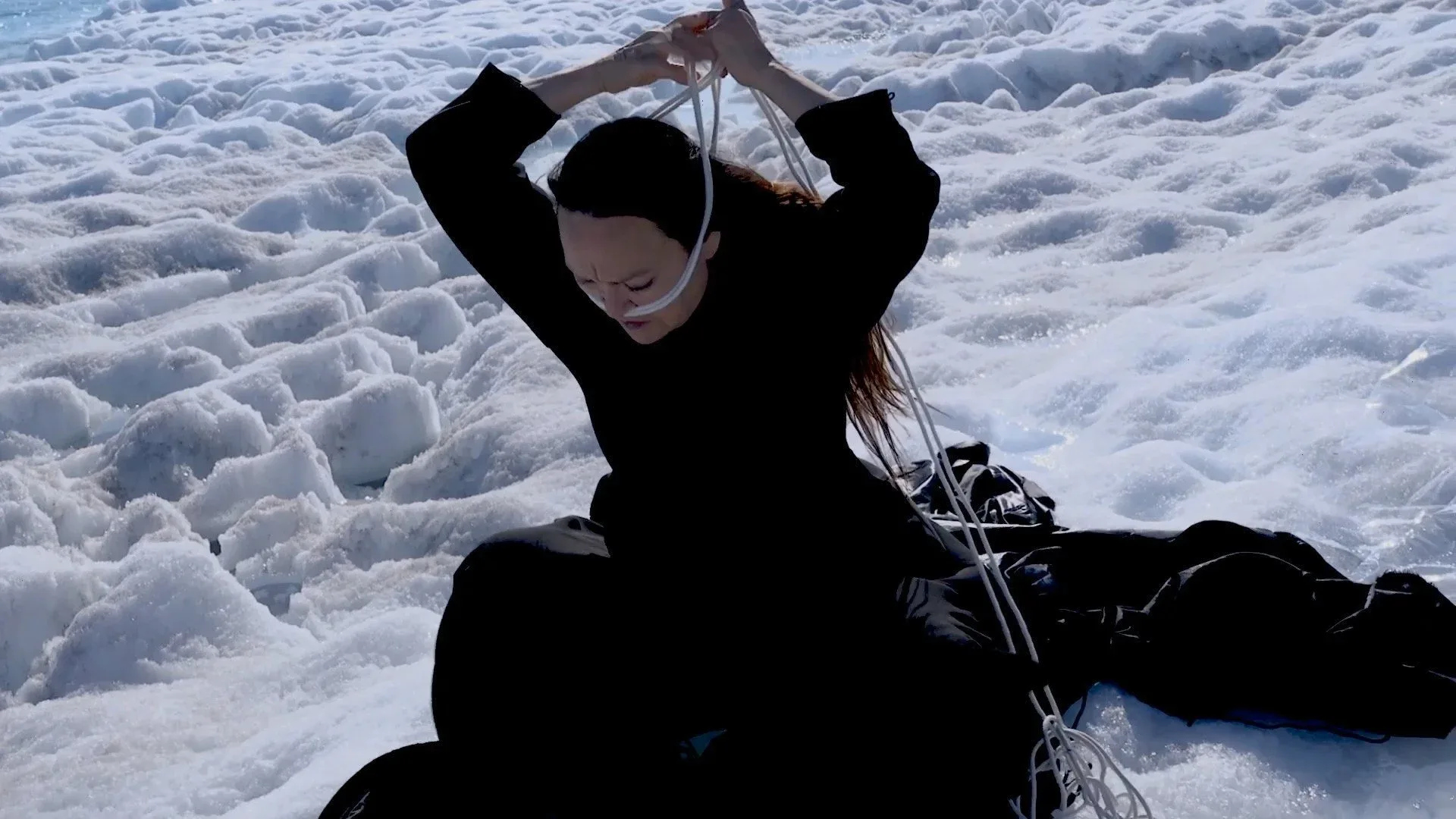
Icelandic multidisciplinary artist Anna Líndal explores geography, mapping, and cartography informed by scientific expeditions that track, record, and visualize the changing landscape.
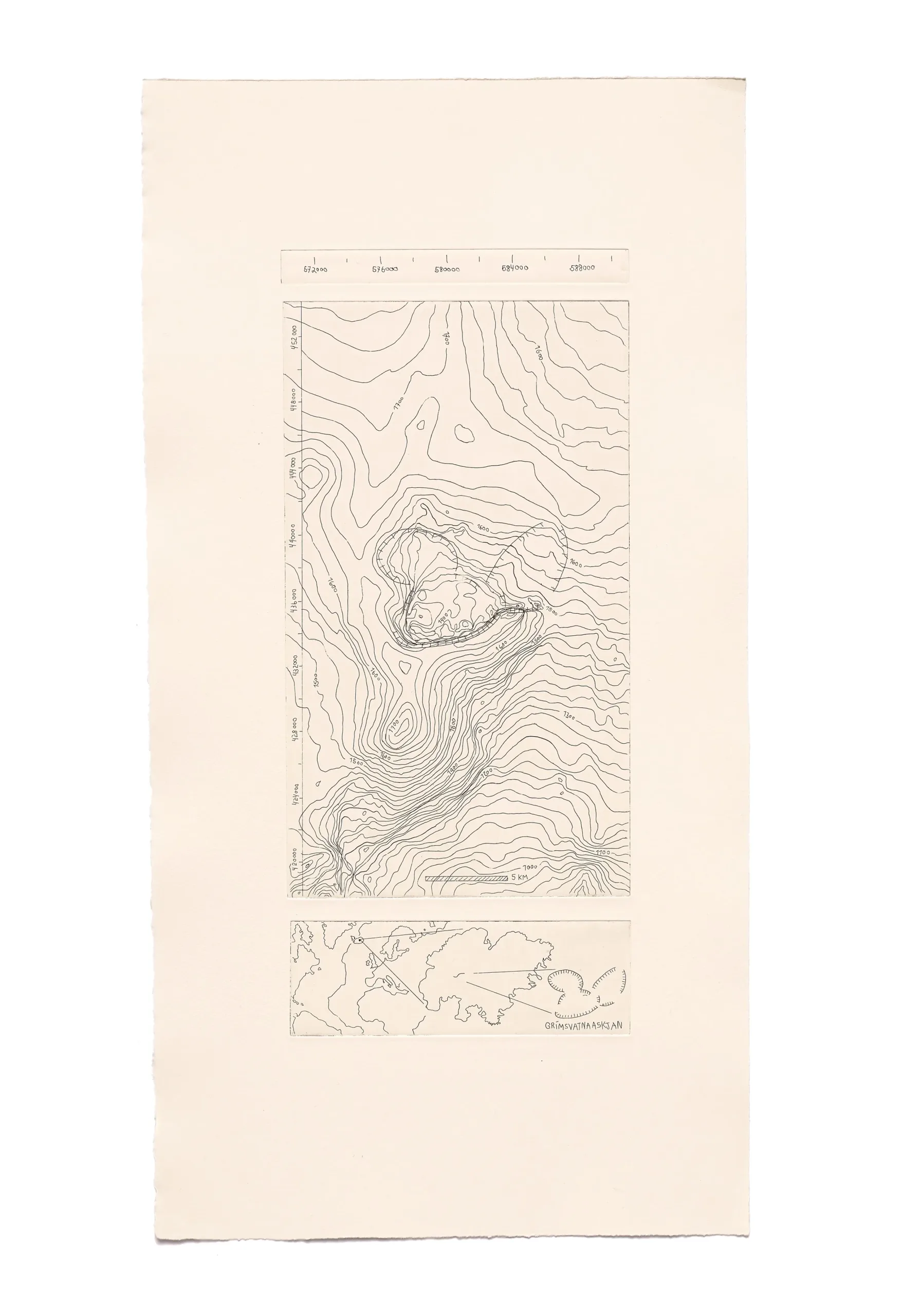
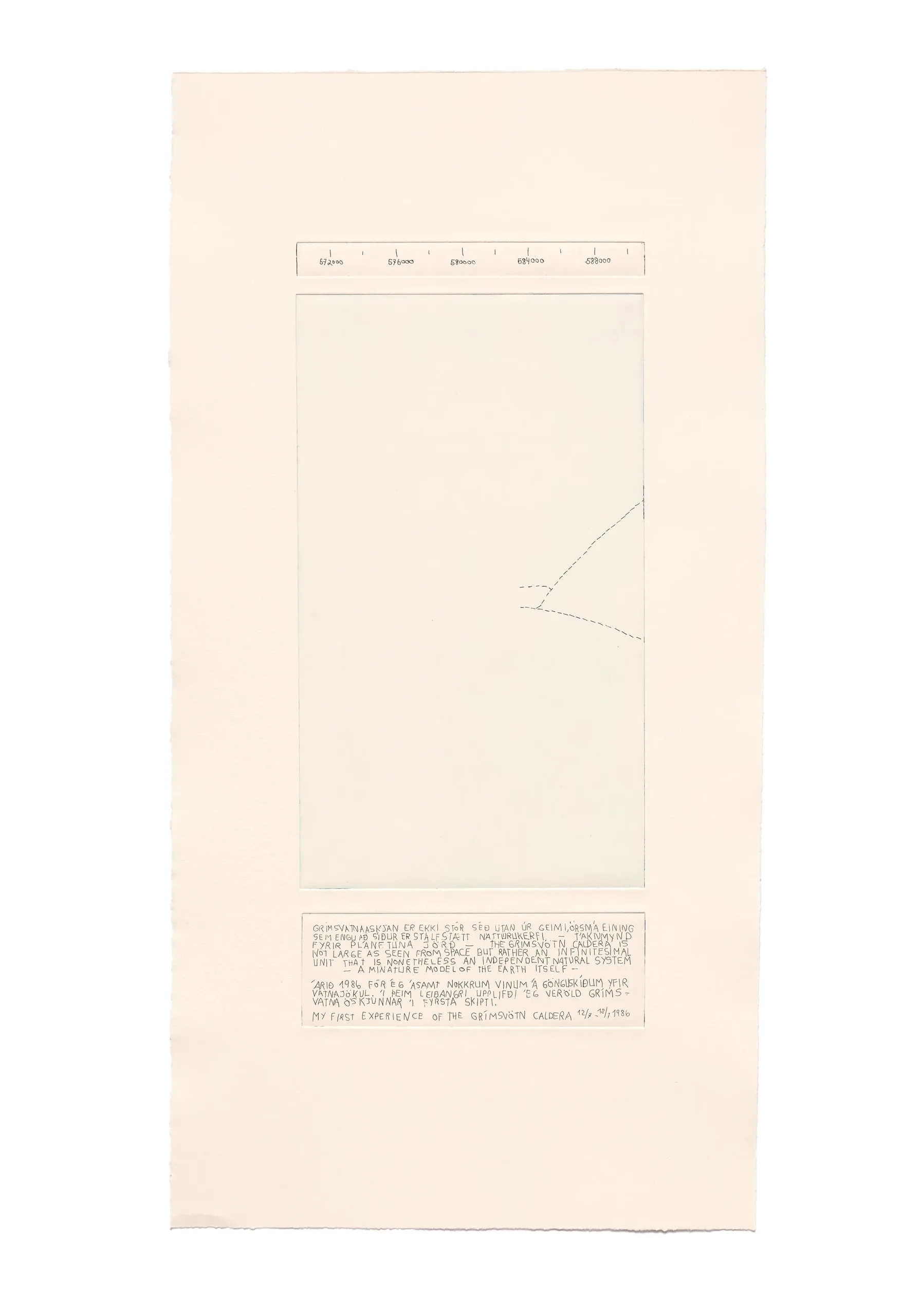
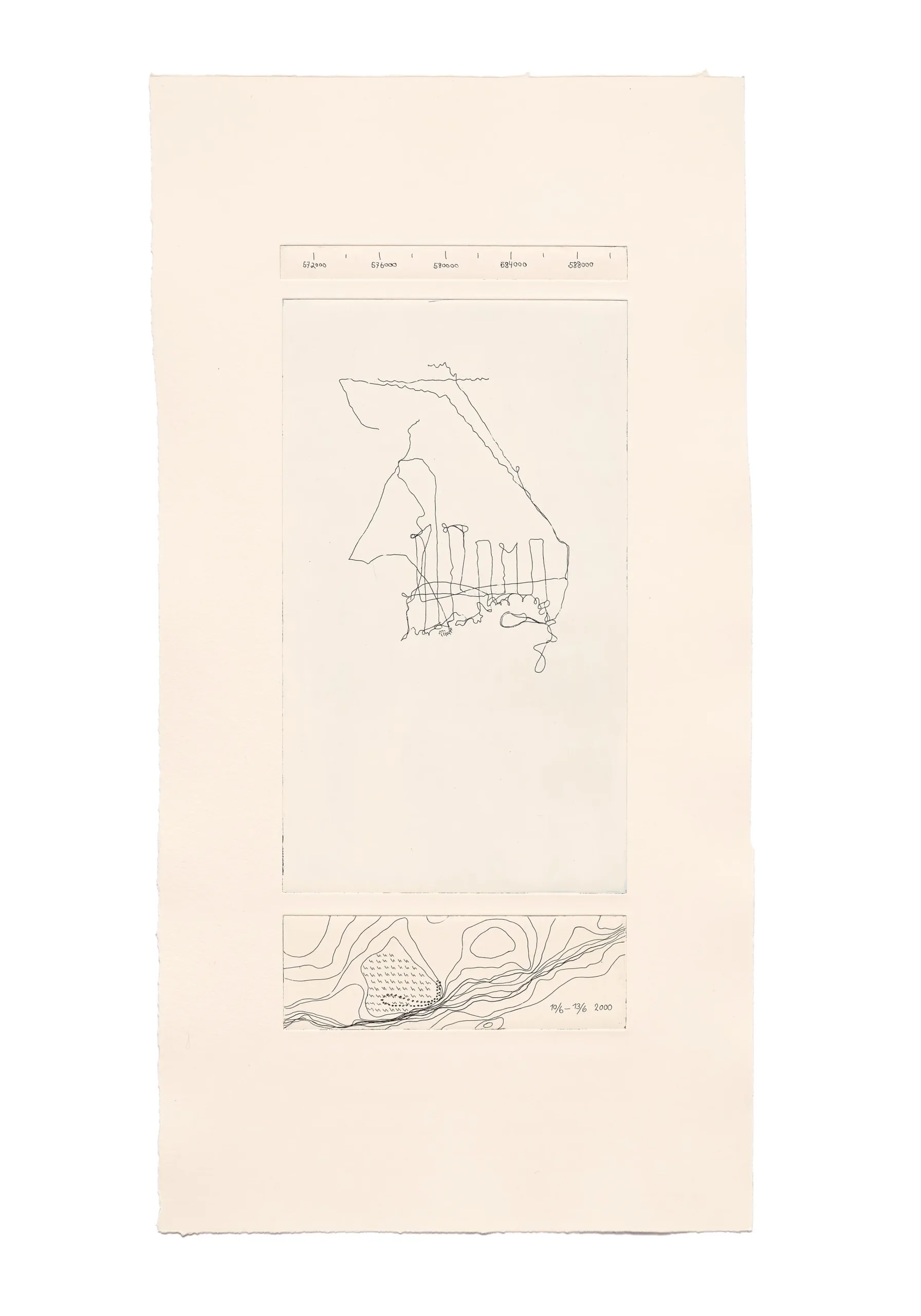
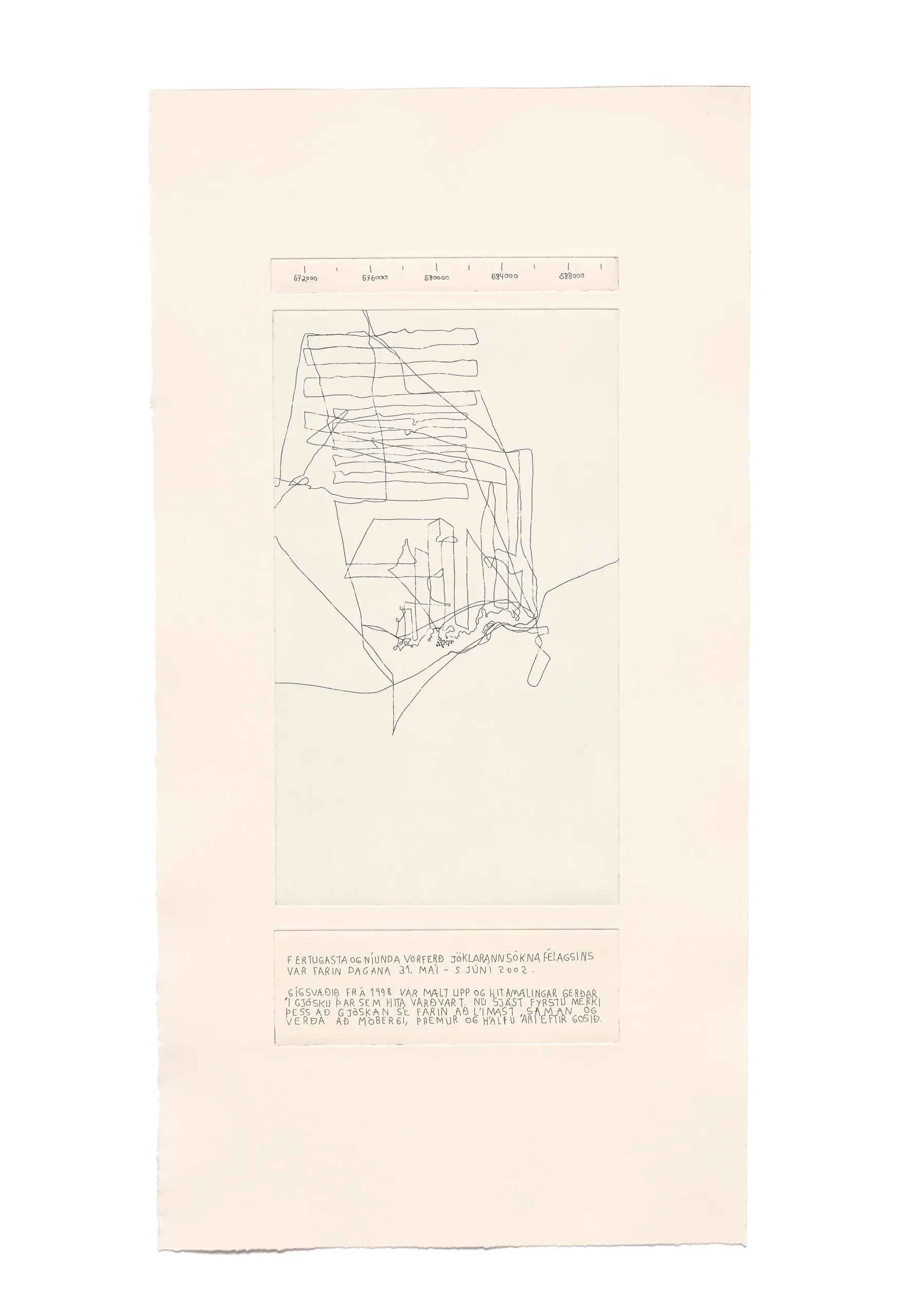
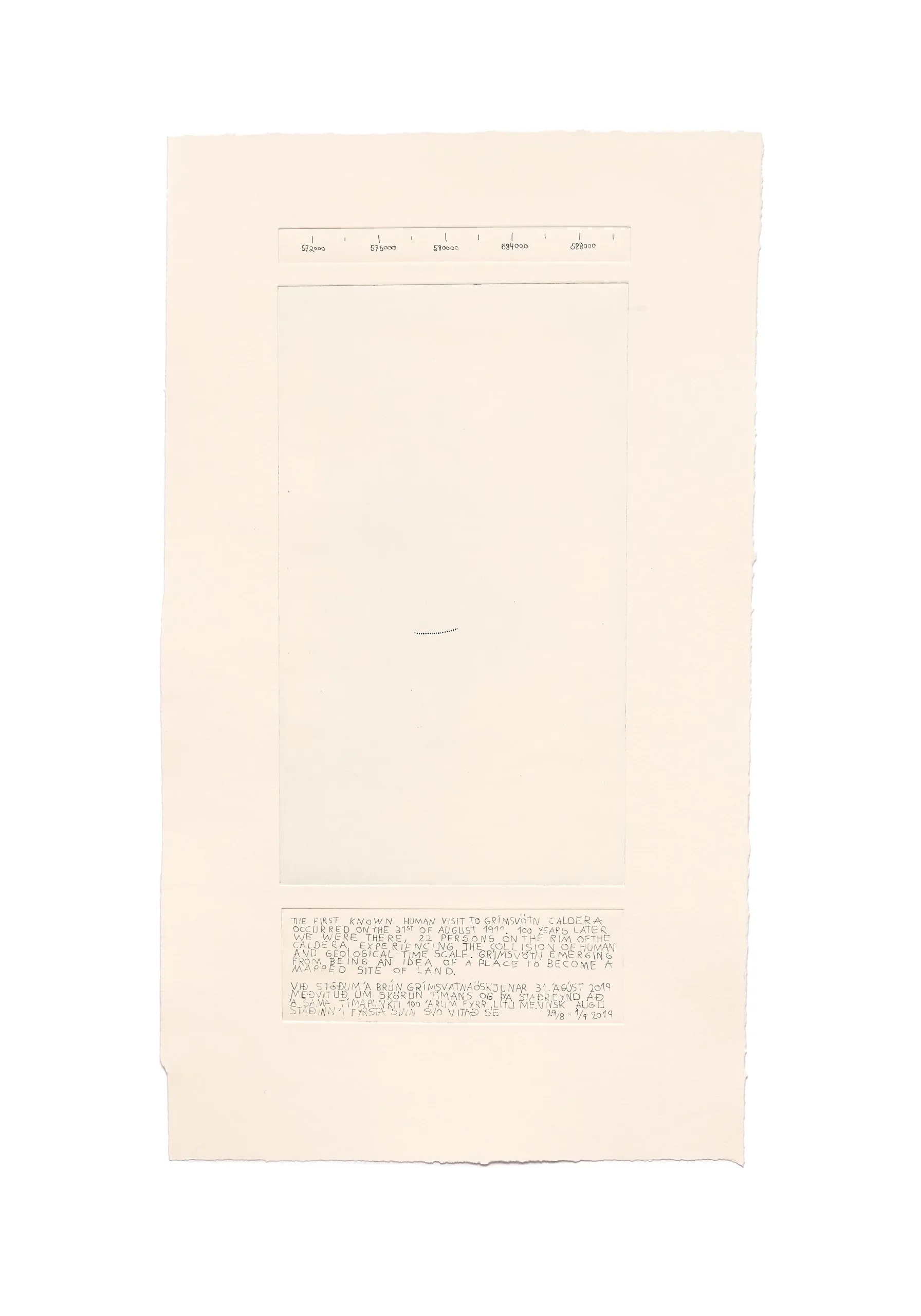
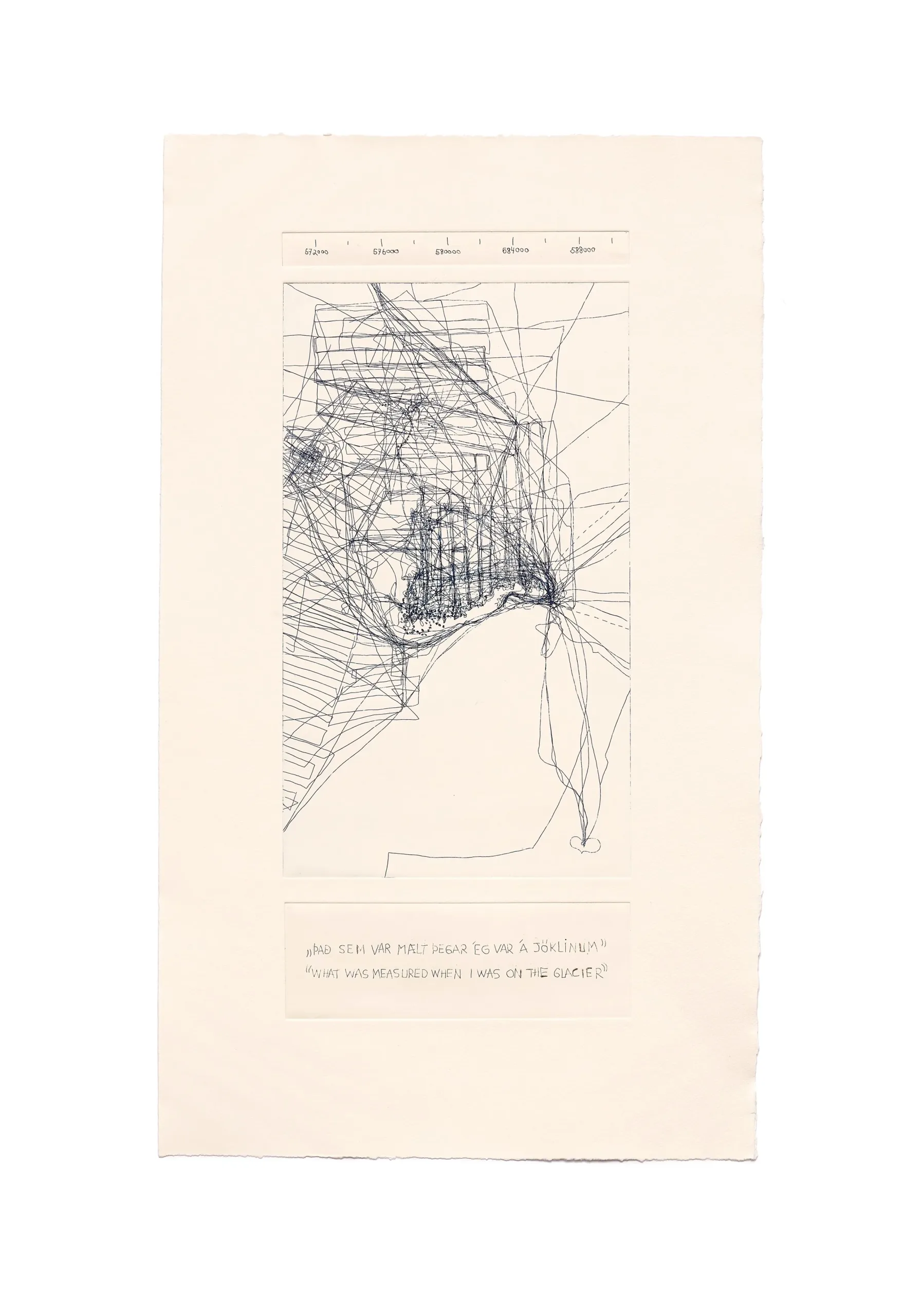
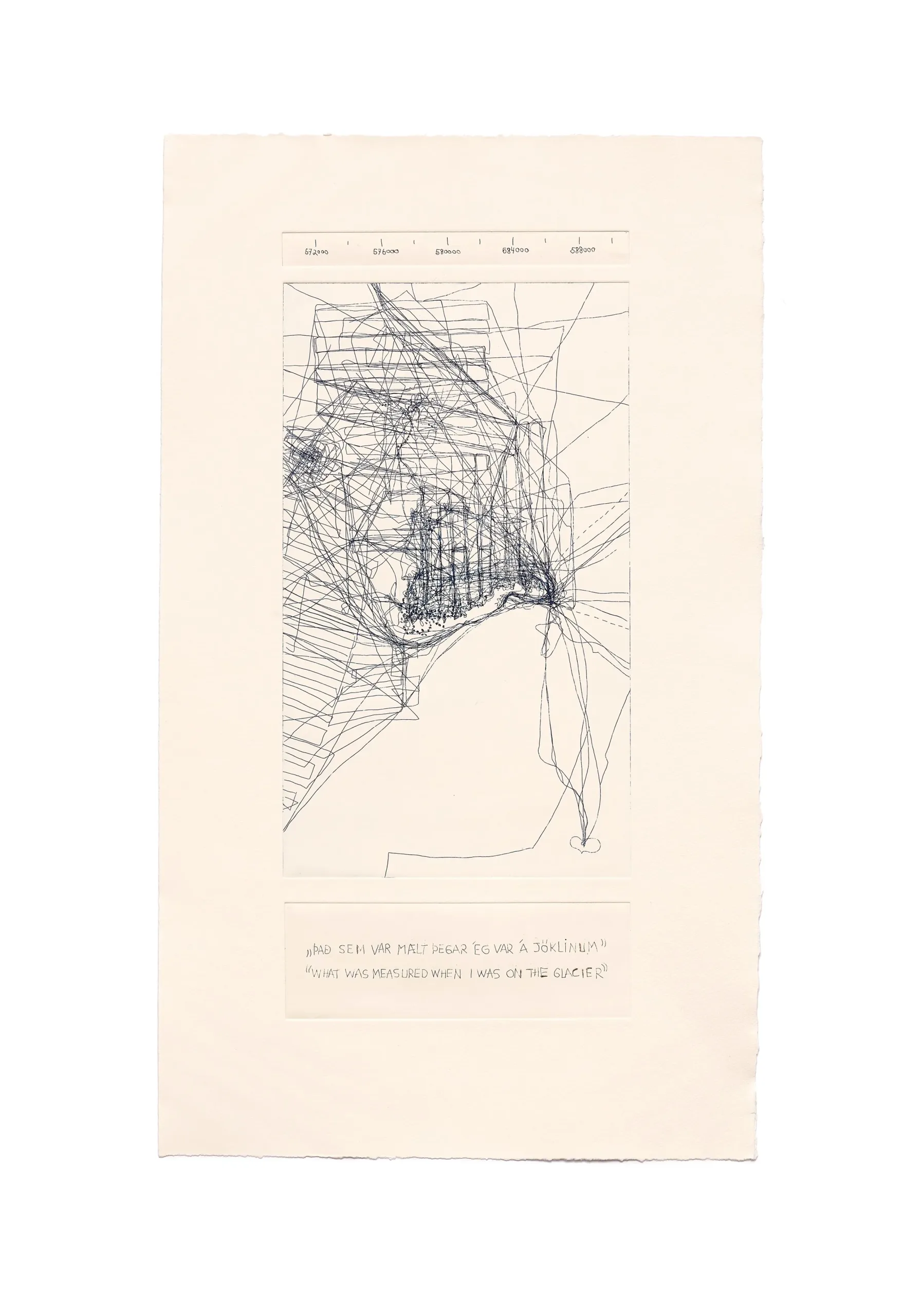
In 1986, Líndal first visited the Grímsvötn caldera on a cross-country ski trip over the Vatnajökull glacier in Eastern Iceland. A caldera is a large cauldron-like depression formed after the emptying of a magma chamber in a very large volcanic eruption. Caldera collapse happens a few times per century worldwide. Since 1997, Líndal has participated in several spring expeditions with the Iceland Glaciological Society (JÖRFÍ) to the area.
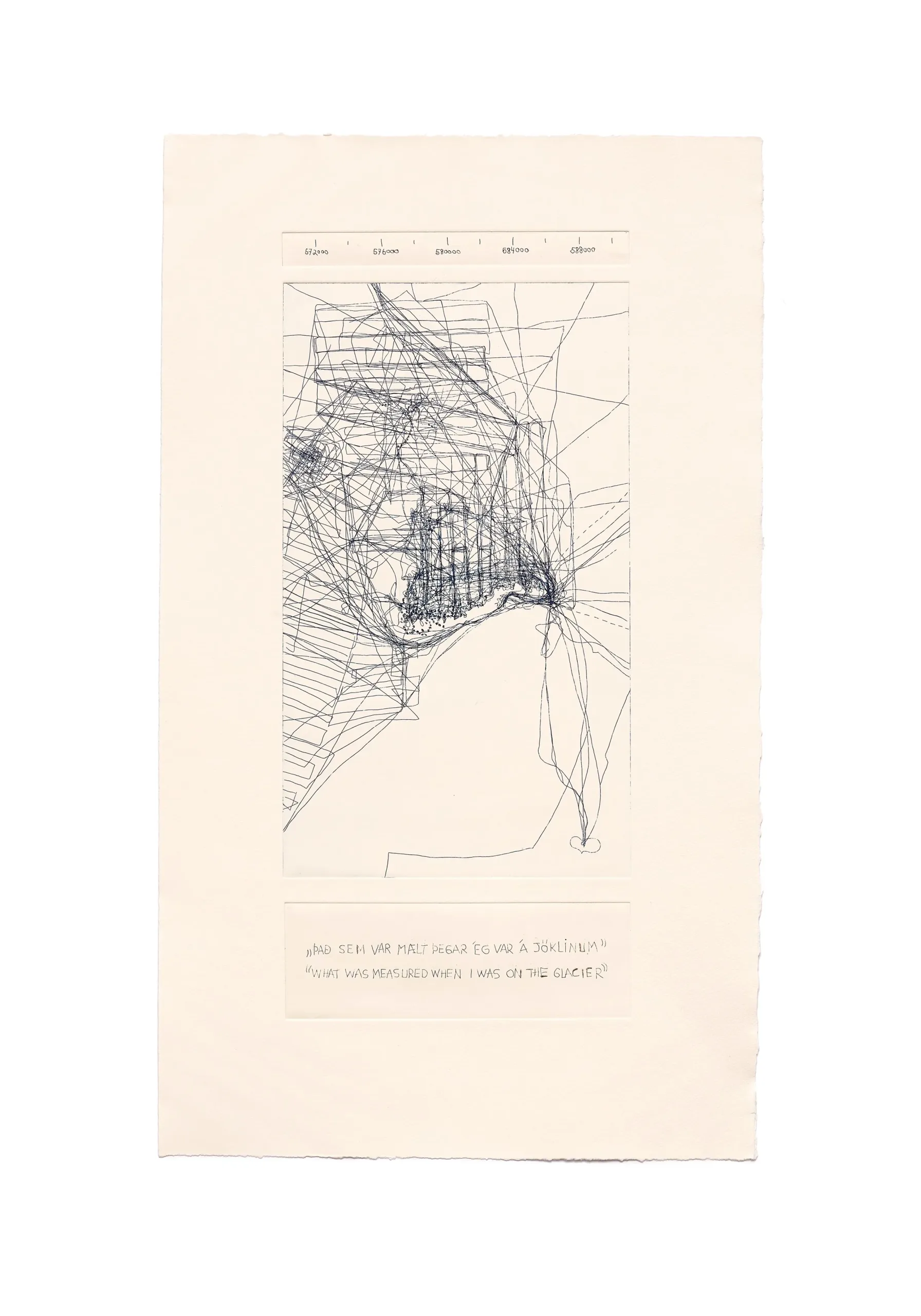
The etchings on view are based on Líndal’s personal experiences working alongside colleagues to record and survey the caldera for over 20 years. When the land is tracked by people, lines are formed to record the glacier and rock beneath it. Líndal transfers these survey lines onto a copper plate, etched in acid and printed on paper, which you see here. In 2019 the artist completed a special expedition in commemoration of the 100th anniversary of the 1919 expedition, when the caldera was discovered. For Líndal, this experience and her etchings are symbolic of the changing landscape and its impression on humanity.
Explore more artworks from North Atlantic Triennial









Related
-

Art with Arias 2026 Performers
May 6, 2026
The Canadian-American baritone Micah Schroeder has been celebrated for his “smooth-as-glass lyrical contours” (The National Post) and is known... -

Etching in Motion: A Cross-Disciplinary Look at Exhibition Planning
April 21, 2026
In preparation for Winslow Homer: Painter, Etcher—opening in summer 2026—the PMA developed an exhibition-specific internship...