The Scarlet Flower
April 16, 2021
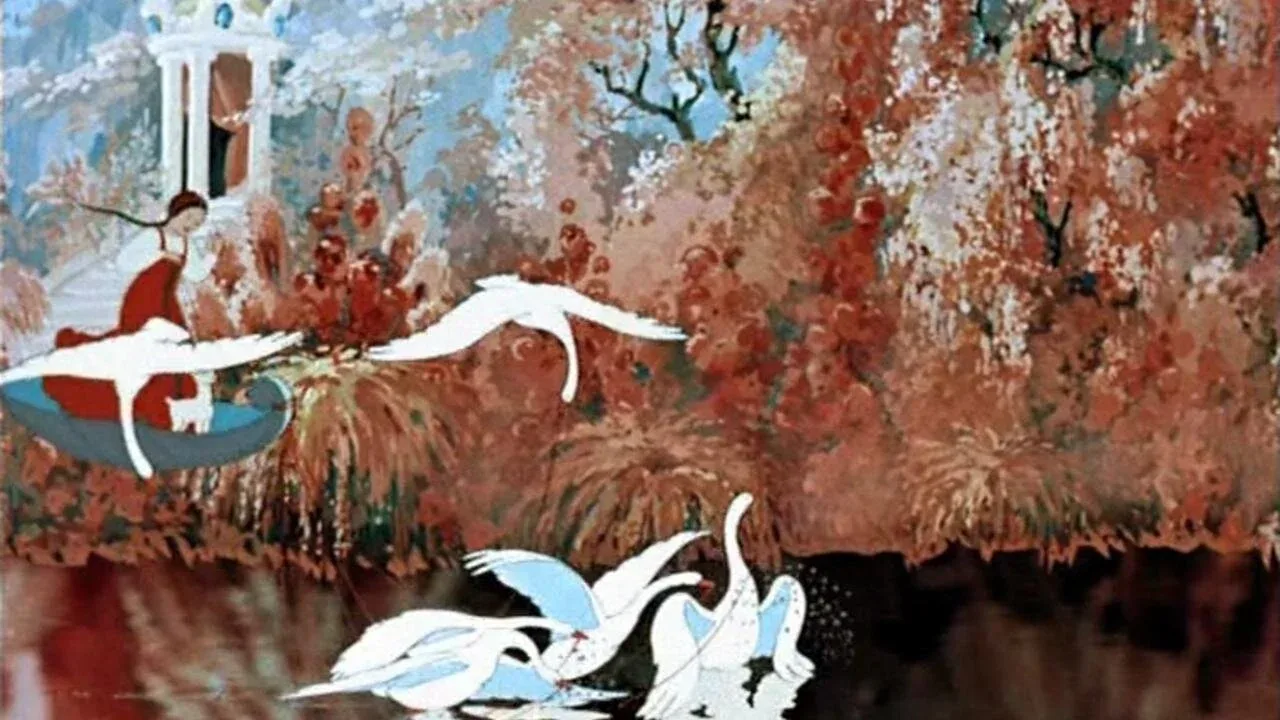
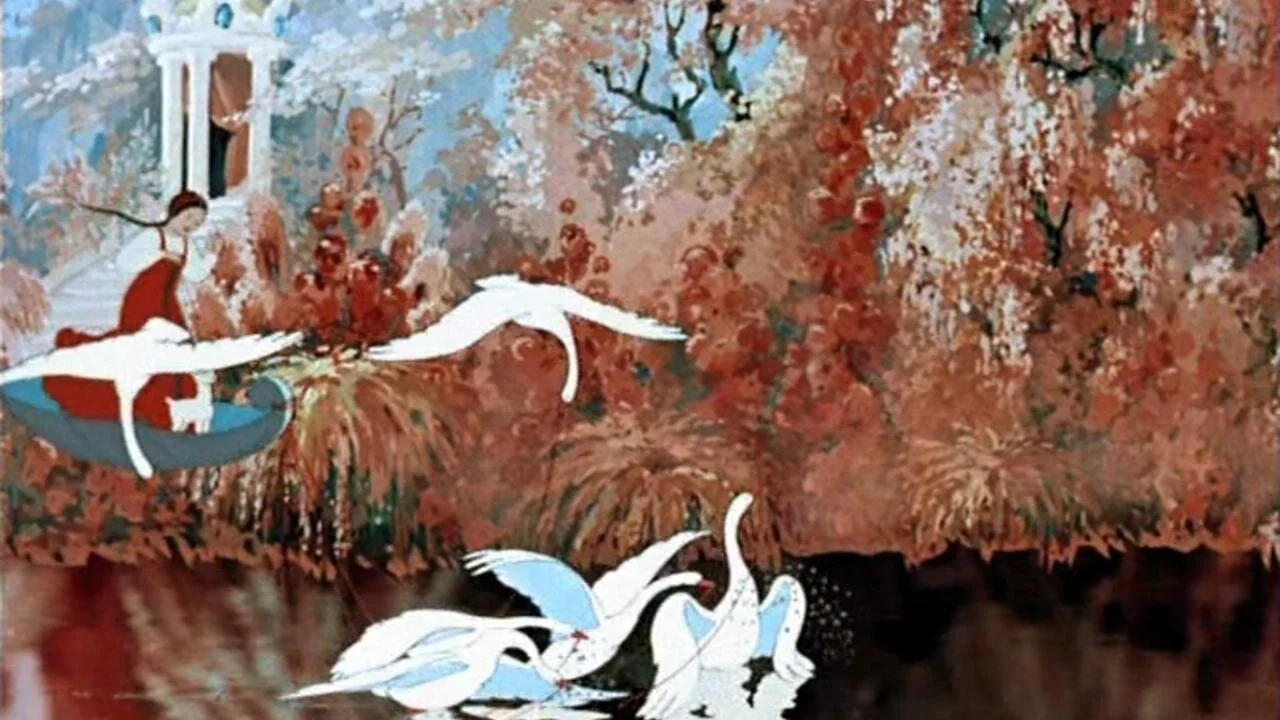
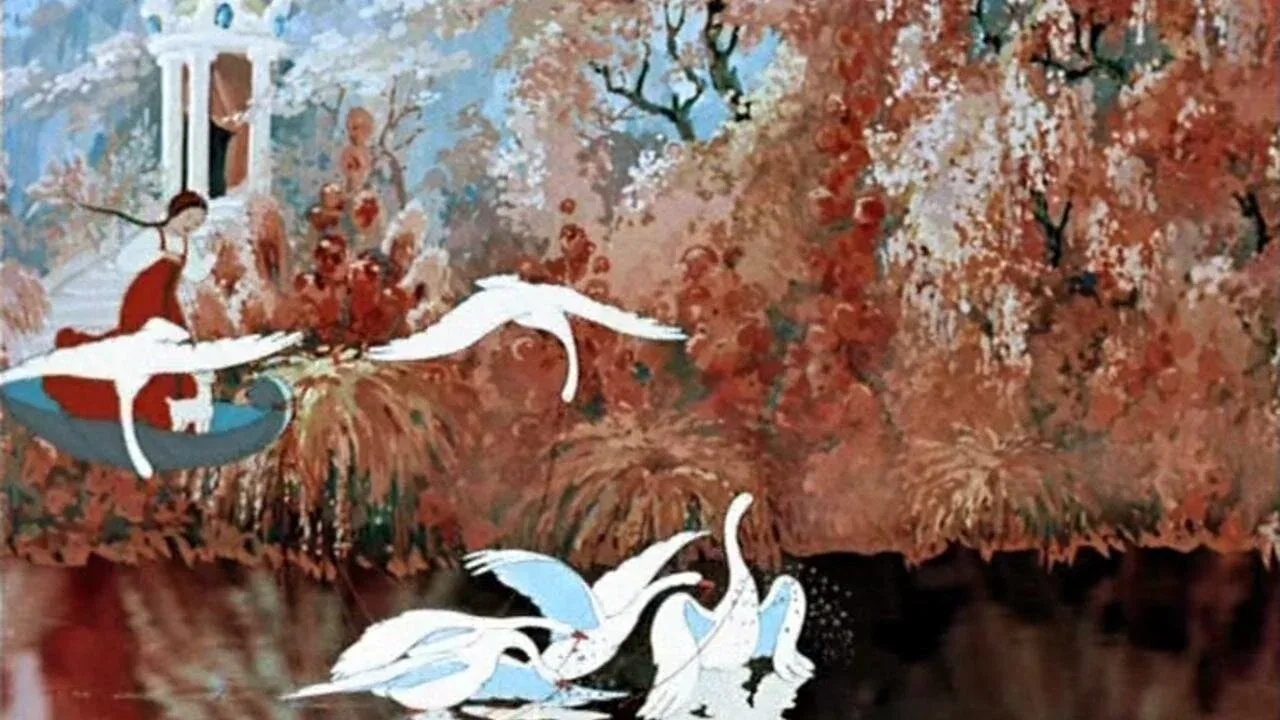
This Soviet animation feature, released in 1952, fits a Beauty and the Beast storyline and adapts a Russian story of the same title by Sergei Aksakov. Produced during a period in which Soviet animation drew heavily from Hollywood, the film features many Disney tropes, from its fairy tale storyline to its musical interlude to its fantastical sequences (including an enchanted carpet ride). It’s worth noting that the fairy tale also occupies a central role in Russian folk art; in the 20th century, in fact, it became a genre for political allegory across Europe and the Soviet Union. The Scarlet Flower, made by Russian-Jewish director Lev Atamanov, advocates for racial tolerance in the context of anti-Semitism.
Stylistically, The Scarlet Flower evokes Russian art and craft, with a memorable operatic number and shimmering, jeweled compositions that glisten like Faberge eggs. The director favors movement within each shot over transitions across shots, granting us time to savor the film’s floral spectacles. Consistent with the conventions of its time period, the film was originally shot in live-action and hand-drawn afterwards, and for viewers raised on digital, Pixar animation, The Scarlet Flower registers as a handcrafted composition. Its characters appear to levitate, dancing and skating throughout the frame, and the film is thematically uplifting yet stylistically skilled nonetheless.
Watch the film below.
VIEW MORE ART IN BLOOM FILMS
Featured
Related
-

Art with Arias 2026 Performers
May 6, 2026
The Canadian-American baritone Micah Schroeder has been celebrated for his “smooth-as-glass lyrical contours” (The National Post) and is known... -

Etching in Motion: A Cross-Disciplinary Look at Exhibition Planning
April 21, 2026
In preparation for Winslow Homer: Painter, Etcher—opening in summer 2026—the PMA developed an exhibition-specific internship...