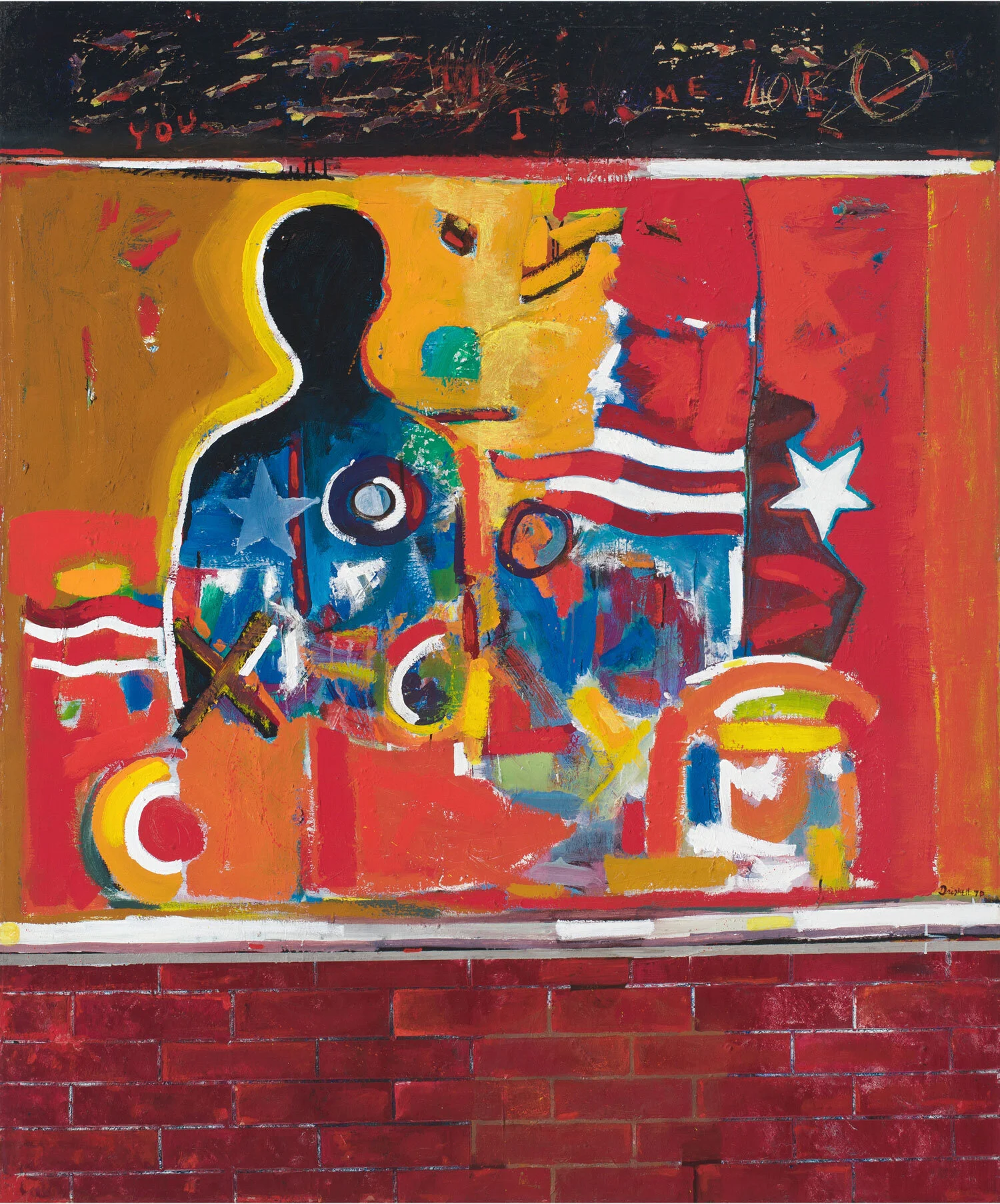
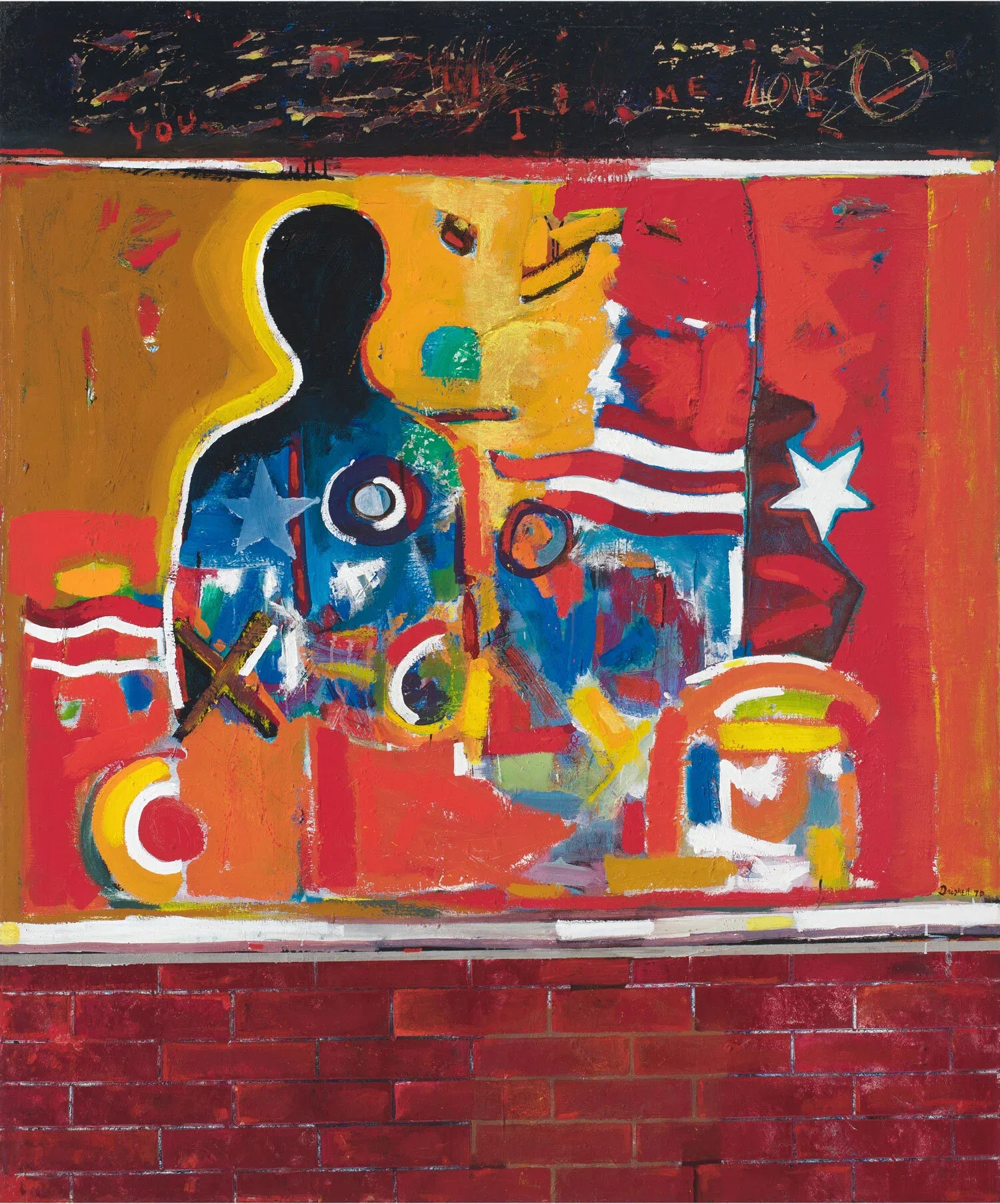
David Driskell | Ghetto Wall #2
October 30, 2020
Best for MIDDLE SCHOOL through HIGH SCHOOL
THEMES

CONTENT AREAS AND STANDARDS MET
What Maine Ed Standards will this lesson meet? What content areas does this lesson connect to?)
Visual Arts
-
A1. Artist’s Purpose
-
Students research and explain how art and artists reflect and influence culture and periods of time.
-
-
B3. Making Meaning
-
Students create art works that communicate an individual point of view.
-
Demonstrate skills in the use of media, tools, techniques, and processes.
-
Demonstrate knowledge of visual art concepts.
-
Communicate a variety of ideas, feelings, and meanings.
-
-
-
D1. Aesthetics and Criticism
-
Students analyze and evaluate art forms.
-
Research and explain how art and artists reflect and shape their time and culture.
-
-
Social Studies
-
Civics & Government
-
Students draw on concepts from civics and government to understand political systems, power, authority, governance, civic ideals and practices, and the role of citizens in the community, Maine, the United States, and the world
-
English/Language Arts
-
Writing Process and Production
-
Composing for Audience and Purpose
-
Routinely produce a variety of clear and coherent writing in which the development, organization, and style are appropriate to task, audience, and purpose.
-
SEL COMPETENCIES
-
Self-awareness: Identify and recognize emotions, linking thoughts and feelings, integrating personal and social identities
-
Social awareness: Perspective taking, empathy, respect for others
-
Relationship skills: Communication and active listening, social engagement Responsible decision-making: Identifying social problems, reflecting
OBJECTIVE
What will students do/experience/think about, etc? What is the overall goal of the lesson plan?
-
Students will explore how our personal experiences influence how we see the world
-
Students will understand the role that public art plays in communicating community values, dreams, stories, and change
-
Students will compare Driskell’s depiction of America in 1970 to America today, grappling with the similarities and differences
ESSENTIAL QUESTION
What is the big question that this lesson plan seeks to explore or have students grapple with?
How do we respond meaningfully and authentically to our historical moment? What is the artist’s role in creating social change?
Related
-

Art with Arias 2026 Performers
May 6, 2026
The Canadian-American baritone Micah Schroeder has been celebrated for his “smooth-as-glass lyrical contours” (The National Post) and is known... -

Etching in Motion: A Cross-Disciplinary Look at Exhibition Planning
April 21, 2026
In preparation for Winslow Homer: Painter, Etcher—opening in summer 2026—the PMA developed an exhibition-specific internship...